A great help center doesn't just answer questions, it evolves with your users. At Notiondesk, we use our own analytics and feedback tools to understand what's working, what's missing, and how to make our documentation more helpful every week.
Here's how you can do the same for your own knowledge base.
1. Use Analytics to understand what matters most
Notiondesk's built-in analytics show exactly how visitors interact with your content.
From the dashboard, you can quickly see:
Most viewed articles : Identify the topics your users care about most. These often represent core pain points or frequently asked questions. Keep them updated and easy to find.
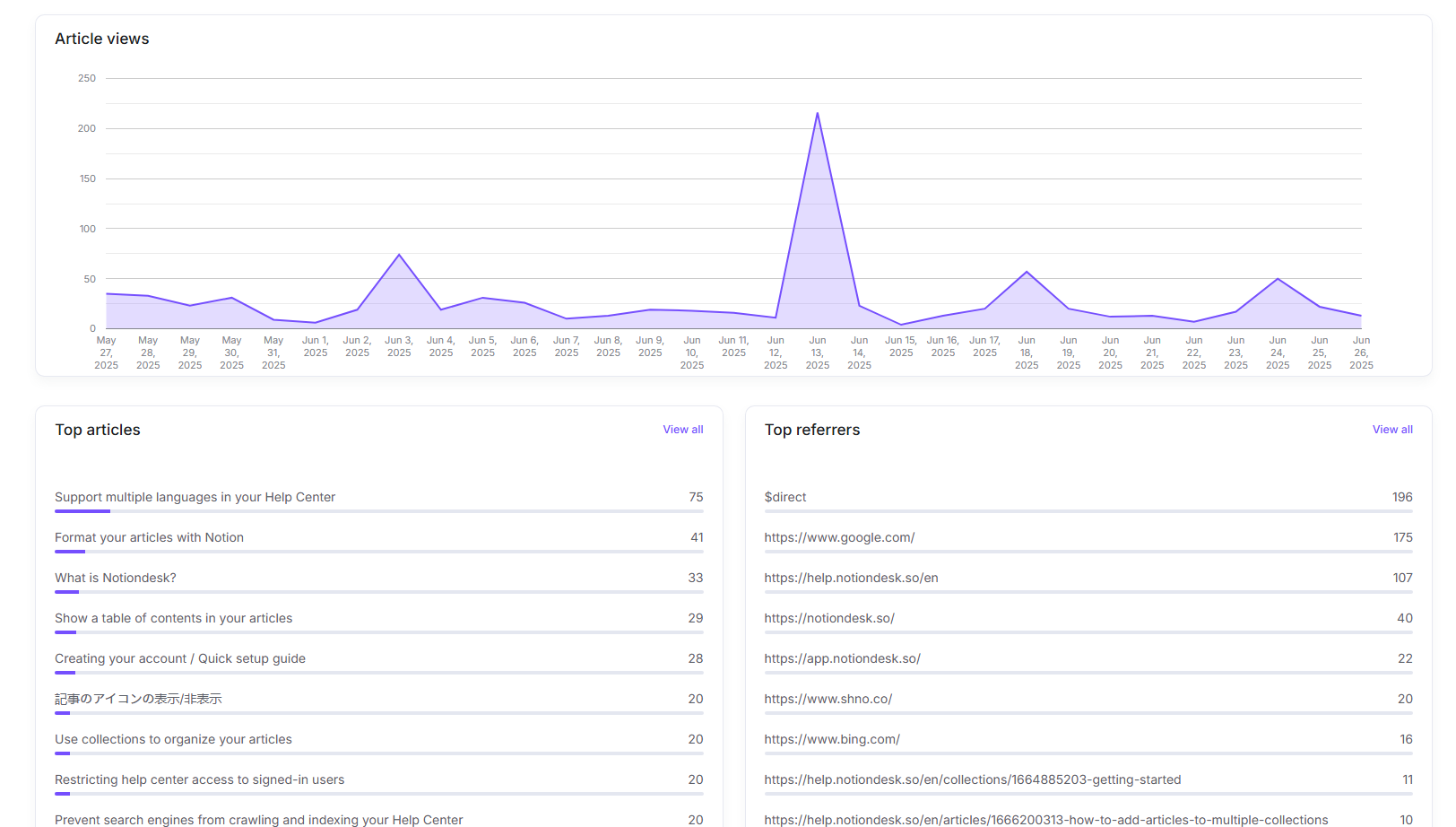
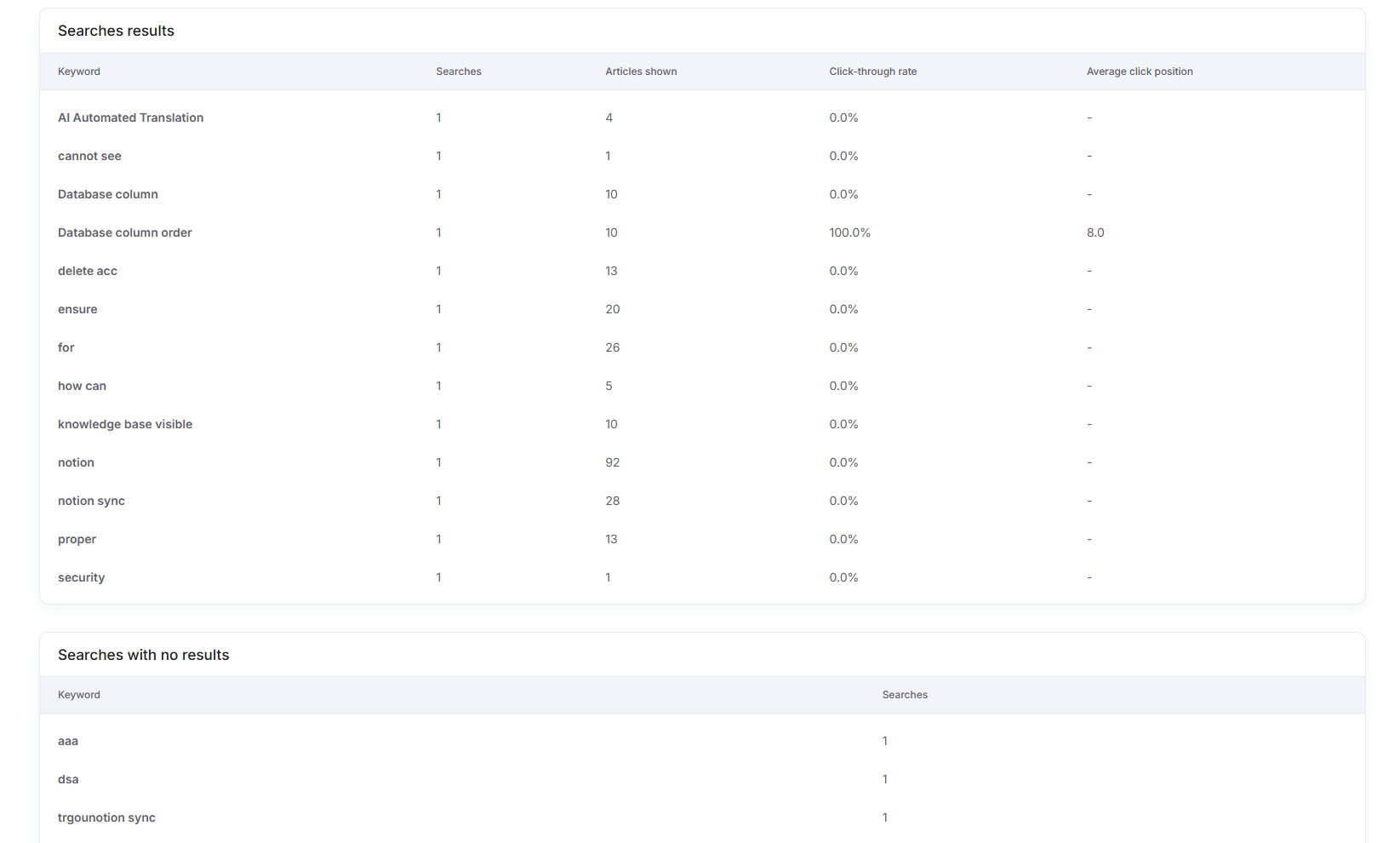
Search terms : See what users are searching for and whether your current articles cover those topics. If users frequently search for something that doesn't exist, it's a sign to create new content.
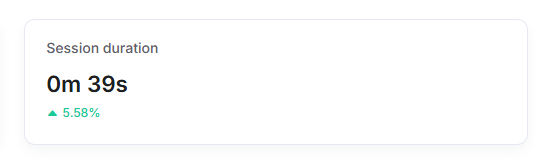
Engagement metrics : Monitor bounce rate and time on page to find articles that aren't holding attention. A short session time or quick exit usually means the article needs clearer explanations or more depth.
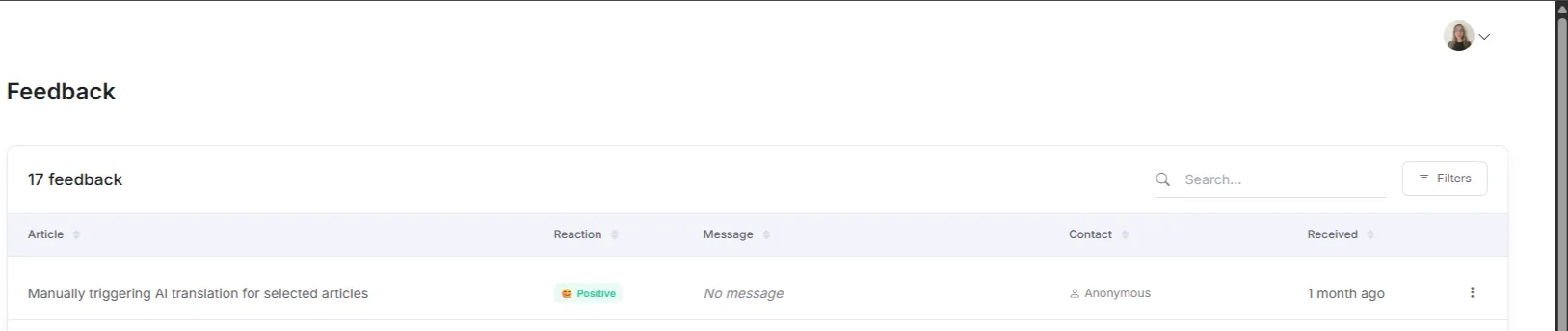
Reader feedback : Every reaction is tracked and tied to its article. You can see what users clicked ("Helpful," "Confusing," "Disappointed") and read any comments they left. This helps you understand how people feel about your content, not just how they use it.
At Notiondesk, we review these insights regularly to decide which articles need updates, which topics to expand, and what new guides to create. Instead of guessing, we let data and feedback shape our documentation roadmap.
2. Turn insights into action
Once you understand your readers' behavior, use that data to improve your content:
- Review analytics weekly : Track views, searches, and reactions to spot trends early.
- Prioritize what matters : Focus on articles with high traffic but poor engagement or repeated negative feedback.
- Act quickly : Open your connected Notion workspace and make edits directly. The next sync will update your help center instantly, keeping everything aligned and consistent.
This creates a continuous feedback loop:
Over time, your help center becomes smarter, more accurate, and more aligned with what your customers actually need.
What's next?
Start reviewing your analytics and feedback from your Notiondesk dashboard!
You'll quickly see which articles drive the most impact, and where small improvements can make a big difference in customer satisfaction.