Managing access to your help center is essential for providing the right information to the right people. With Notiondesk, you can restrict access to your help center in two main ways:
- Password: Limit access to your help center using a password, which you can share with authorized users.
- Guest Accounts: Create guest accounts with specific roles, which allows you to customize the access and visibility of your help center for individual users.
This article covers the Guest accounts option. For the Password option, see how to use password protection for your help center.
Turn on guest accounts
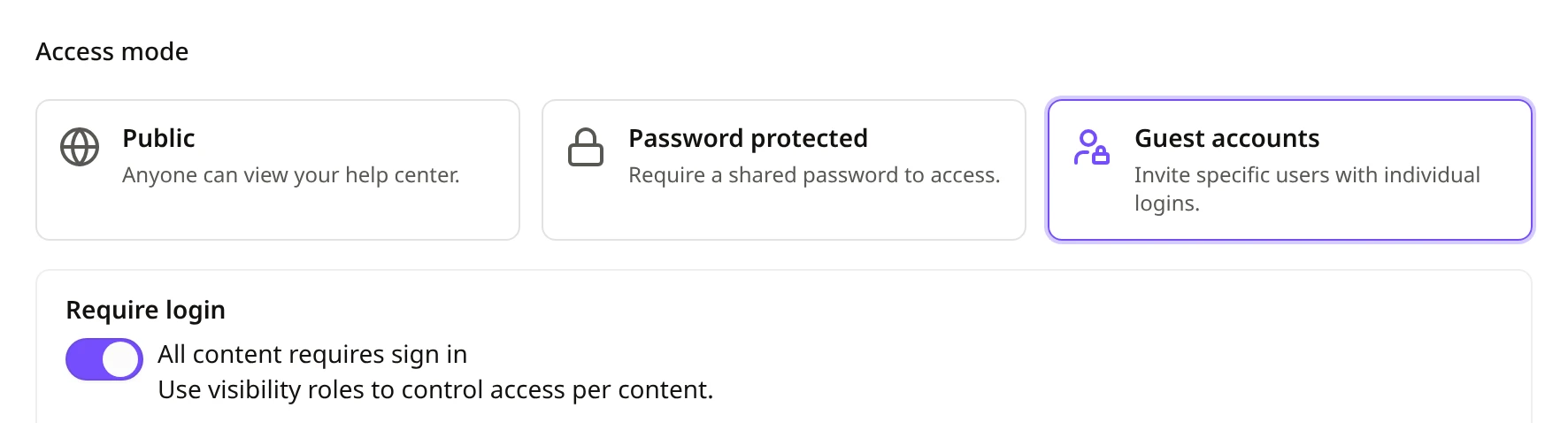
- Go to Settings > Access.
- Under Access control, select Guest accounts.
- Leave Require login on to make all content require sign-in. Turn it off to keep your help center open and restrict only some content with roles.
Add a guest account
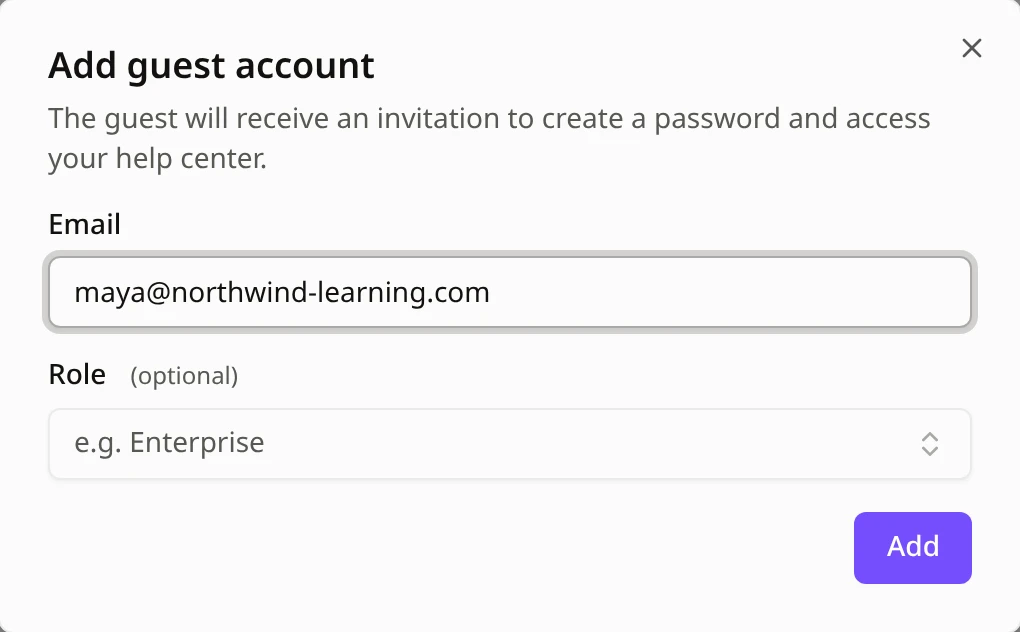
- Under Guest accounts, click Add account.
- Enter the email address and, if you need one, a role.
- Click Add. The guest gets an email to set a password.
To control which articles each role can read, see setting view permissions for articles based on user roles.
Let guests sign in with your app
If your users already have an account in your app, they don't need a separate password. Set up single sign-on (SSO) for your help center and Notiondesk signs them in through your app, with the role of the guest account you invited with their email.
Examples of Guest Account Use Cases
- Online Course Instructors: If you offer online courses and want to provide exclusive access to course materials for enrolled students, guest accounts can help you manage student access efficiently.
- Companies with Private Documentation Some companies may have internal documents or policies that need to be accessible only to specific employees or teams. Guest accounts can help you ensure that only authorized personnel have access.
- Membership-based Websites: If you run a membership website or a premium subscription service, guest accounts can help you provide exclusive access to your members, ensuring they receive the content and benefits they're paying for.